






Archives of Nethys

Source Impossible Magic pg. 27
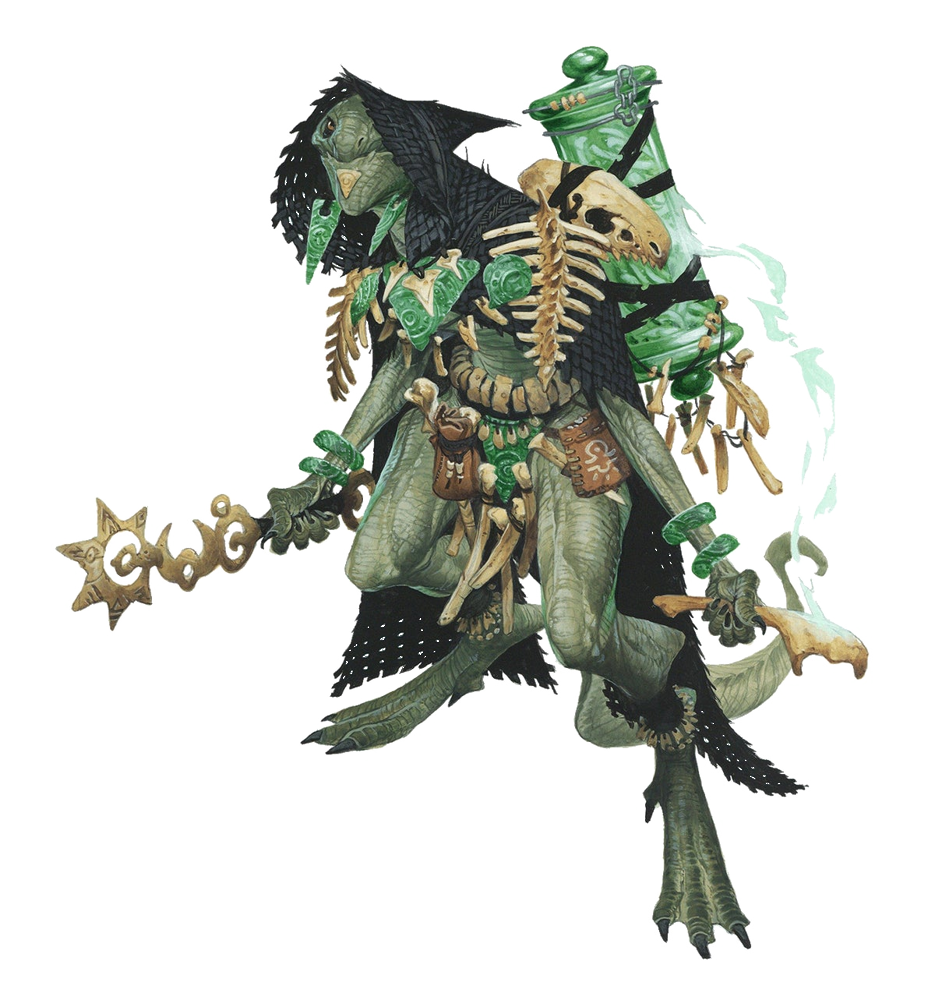
Death is as common, if not more so, than life. Despite this, death and decay are considered subjects of the macabre, and those willing to dive headfirst into the fascinations they invoke are necromancers. These occult spellcasters seek the ever-changing borders of life and death, manipulating magic of vitality and void to suit their will. The undead both serve and cower before them.
Key Attribute: INTELLIGENCE
At 1st level, your class gives you an attribute boost to Intelligence.
Hit Points: 8 plus your Constitution modifier
You increase your maximum number of HP by this number at 1st level and every level thereafter.
Roleplaying the Necromancer
During Combat Encounters...
You manipulate the flow of life and death on the battlefield. You both create and destroy your undead servants to amplify your occult powers and manipulate battle. You also tip the scales by draining the life of your foes to heal your allies.During Social Encounters...
Your knowledge of the esoteric and macabre can be both insightful and frightening. Many find such knowledge to be gruesomely enchanting. When natural charm fails, your occult magic is a potent tool for manipulating the living and the dead.While Exploring...
Since you understand them better than most, you excel at locating and handling haunts with your occult prowess. You might summon your undead thralls to trigger traps or to serve as a decoy when you think enemies are near.In Downtime...
You can brew potions, craft magic items, or scribe scrolls for your party and seek out hidden or locked-away knowledge about your grim fascination. Perhaps you tend to the local graveyard to ensure the dead are properly put to rest.You Might...
- Have a feverish desire to study the anatomy of creatures you discover along your journey.
- Pay respects for the dead and the death you cause while understanding that it is the inevitable end of all living creatures.
- Seek ways to cheat the natural order of life and death, either to make yourself immortal or bring back a loved one.
Others Probably...
- Assume you enjoy the cruelty of death and revel in decay.
- Seek you out, hoping you can send or receive a message from someone who has passed.
- Ignore you, as your existence is a reminder that they and everyone they know will someday die.
Initial Proficiencies
At 1st level, you gain the listed proficiency ranks in the following statistics. You are untrained in anything not listed unless you gain a better proficiency rank in some other way.Perception
Trained in PerceptionSaving Throws
Expert in FortitudeTrained in Reflex
Trained in Will
Skills
Trained in OccultismTrained in a number of additional skills equal to 2 plus your Intelligence modifier
Attacks
Trained in simple weaponsTrained in unarmed attacks
Defenses
Trained in light armorTrained in unarmored defense
Class DC
Trained in necromancer class DCSpells
Trained in spell attack modifierTrained in spell DC
Class Features
You gain these features as a Necromancer. Abilities gained at higher levels list the levels at which you gain them next to the features' names.| Your Level | Class Features |
| 1 | Ancestry and background, attribute boosts, initial proficiencies, necromancer spellcasting, grave spells, fatal method, grim fascination, mastery of life and death, undead lore |
| 2 | Necromancer feat, skill feat |
| 3 | 2nd-rank spells, general feat, Inevitable Return, mental wards, skill increase |
| 4 | Necromancer feat, skill feat |
| 5 | 3rd-rank spells, attribute boosts, ancestry feat, reflex expertise, skill increase |
| 6 | Necromancer feat, skill feat |
| 7 | 4th-rank spells, expert necromancy, general feat, perception expertise, skill increase |
| 8 | Necromancer feat, skill feat |
| 9 | 5th-rank spells, ancestry feat, skill increase |
| 10 | Attribute boosts, necromancer feat, skill feat |
| 11 | 6th-rank spells, general feat, skill increase, unnatural fortitude, weapon expertise |
| 12 | Necromancer feat, skill feat |
| 13 | 7th-rank spells, ancestry feat, light armor expertise, skill increase, weapon specialization |
| 14 | Necromancer feat, skill feat |
| 15 | 8th-rank spells, attribute boosts, general feat, master necromancy, skill increase |
| 16 | Necromancer feat, skill feat |
| 17 | 9th-rank spells, ancestry feat, skill increase, undying resilience |
| 18 | Necromancer feat, skill feat |
| 19 | Epitaph, general feat, legendary necromancy, skill increase |
| 20 | Attribute boosts, necromancer feat, skill feat |
| Your Level | Cantrips | 1st | 2nd | 3rd | 4th | 5th | 6th | 7th | 8th | 9th | 10th |
| 1 | 5 | 1 | — | — | — | — | — | — | — | — | — |
| 2 | 5 | 2 | — | — | — | — | — | — | — | — | — |
| 3 | 5 | 2 | 1 | — | — | — | — | — | — | — | — |
| 4 | 5 | 2 | 2 | — | — | — | — | — | — | — | — |
| 5 | 5 | 2 | 2 | 1 | — | — | — | — | — | — | — |
| 6 | 5 | 2 | 2 | 2 | — | — | — | — | — | — | — |
| 7 | 5 | 2 | 2 | 2 | 1 | — | — | — | — | — | — |
| 8 | 5 | 2 | 2 | 2 | 2 | — | — | — | — | — | — |
| 9 | 5 | 2 | 2 | 2 | 2 | 1 | — | — | — | — | — |
| 10 | 5 | 2 | 2 | 2 | 2 | 2 | — | — | — | — | — |
| 11 | 5 | 2 | 2 | 2 | 2 | 2 | 1 | — | — | — | — |
| 12 | 5 | 2 | 2 | 2 | 2 | 2 | 2 | — | — | — | — |
| 13 | 5 | 2 | 2 | 2 | 2 | 2 | 2 | 1 | — | — | — |
| 14 | 5 | 2 | 2 | 2 | 2 | 2 | 2 | 2 | — | — | — |
| 15 | 5 | 2 | 2 | 2 | 2 | 2 | 2 | 2 | 1 | — | — |
| 16 | 5 | 2 | 2 | 2 | 2 | 2 | 2 | 2 | 2 | — | — |
| 17 | 5 | 2 | 2 | 2 | 2 | 2 | 2 | 2 | 2 | 1 | — |
| 18 | 5 | 2 | 2 | 2 | 2 | 2 | 2 | 2 | 2 | 2 | — |
| 19 | 5 | 2 | 2 | 2 | 2 | 2 | 2 | 2 | 2 | 2 | 1† |
| 20 | 5 | 2 | 2 | 2 | 2 | 2 | 2 | 2 | 2 | 2 | 1† |
| † The epitaph class feature gives you a 10th-level spell slot that works a bit differently from other spell slots. | |||||||||||
Ancestry and Background
In addition to what you get from your class at 1st level, you have the benefits of your selected ancestry and background.Attribute Boosts
In addition to what you get from your class at 1st level, you have four free boosts to different attribute modifiers.At 5th level and every 5 levels thereafter, you get four free boosts to different attribute modifiers. If an attribute modifier is already +4 or higher, it takes two boosts to increase it; you get a partial boost and must boost that attribute again at a later level to increase it by 1.
Initial Proficiencies
At 1st level, you gain a number of proficiencies that represent your basic training. These proficiencies are noted at the start of this class.Necromancer Spellcasting
Your studies into the nature of life and death have resulted in the ability to cast occult spells. You are a spellcaster, and you can cast spells of the occult tradition using the Cast a Spell activity. As a necromancer, your chants are generally inspired by laments, requiems, and other rites for the dead, while your gestures evoke the unnatural movement of muscle and cracking of bone.At 1st level, you can prepare one 1st-rank spell and five cantrips each morning from your dirge (see below). Prepared spells remain available to you until you cast them or until you prepare your spells again. The number of spells you can prepare each day is called your spell slots.
As you increase in level as a necromancer, the number of spells you can prepare each day increases, as does the highest rank of spell you can cast, as shown in the Necromancer Spells per Day table.
Some of your spells require you to attempt a spell attack to see how effective they are or for your enemies to roll against your spell DC (typically by attempting a saving throw). Since your key attribute is Intelligence, your spell attack modifier and spell DC use your Intelligence modifier.
Heightening Spells
When you get spell slots of 2nd rank and higher, you can fill those slots with stronger versions of lower-rank spells. This increases the spell's rank, heightening it to match the spell slot. Many spells have specific improvements when they are heightened to certain ranks.Cantrips
Some of your spells are cantrips. A cantrip is a special type of spell that doesn't use spell slots. You can cast a cantrip at will, any number of times per day. A cantrip is always automatically heightened to half your level rounded up—this is usually equal to the highest rank of necromancer spell slot you have. For example, as a 1st- level necromancer, your cantrips are 1st-rank spells, and as a 5th-level necromancer, your cantrips are 3rd-rank spells.Dirge
Your occult spells become a part of an internal dirge that echoes throughout your body, bones, and even your spirit. Each day, to prepare your spells, you pull forth pieces of your dirge to vocalize. Your dirge contains your choice of eight occult cantrips, the 1st-rank spell harm, and four other 1st-rank occult spells of your choice. You choose these from the common spells on the occult spell list or from other occult spells you gain access to. You can prepare and cast harm as an occult spell.Each time you gain a level, you add two occult spells to your dirge, of any spell rank for which you have spell slots, chosen from common occult spells or others you gain access to and learn via Learn a Spell.
Grave Spells
Your necromantic prowess allows you to create unique effects called grave spells, which are a type of focus spell. It costs 1 Focus Point to cast a focus spell. You refill your focus pool during your daily preparations, and you can regain 1 Focus Point by spending 10 minutes using the Refocus activity to speak to the dead, meditate on local supernatural activity, or contemplate anatomical truths. If you have a thrall when you begin Refocusing, you can destroy it to regain 2 Focus Points when you Refocus.Focus spells are automatically heightened to half your level rounded up, much like cantrips. Focus spells don't require spell slots, and you can't cast them using spell slots. The maximum Focus Points your focus pool can hold is equal to the number of focus spells you have, but can never be more than 3 points. The full rules for focus spells appear here.
You gain the necrotic bomb grave spell and an additional grave spell from your grim fascination at 1st level. Therefore, you start with a focus pool of 2 Focus Points. You can learn additional grave spells through necromancer feats.
Grave Cantrips
Grave cantrips are special grave spells that don't cost Focus Points, so you can use them as often as you like. Grave cantrips are granted in addition to the cantrips you choose with necromancer spellcasting. Unlike other cantrips, you can't swap out grave cantrips gained from necromancer feats at a later level, unless you swap out the specific feat via retraining. You learn the create thrall and thrall charge grave cantrips, which allow you to summon expendable thralls and manipulate them to do your bidding.Fatal Method
As a necromancer, you select one fatal method at 1st level. This choice determines your combat style: a puppeteer who creates more thralls to fuel spells, or a reaper who becomes more combat-focused with weapons and armor.Fatal Methods can be found here
Grim Fascination
As a necromancer, you select one grim fascination at 1st level. This fascination is a focus of necrotic study that you have developed a greater mastery over. However, grim fascinations don’t prevent you from studying and using other forms of necromancy. Your choice of grim fascination grants you a grave spell and a thrall enhancement that applies to any thrall you create.Grim Fascinations can be found here
Mastery of Life and Death
You have studied the delicate balance of life and death to such a point that you can dance between them with ease. Whenever you Cast a Spell or use an ability that would deal void or vitality damage, you can choose for the spell to do either void or vitality damage to each target separately. When you Cast a Spell or use an ability that would affect or target only living creatures or only undead creatures, you can affect and target both. This does not apply to the healing effects of spells or abilities. For example, you could have the harm spell deal vitality damage to undead enemies, but it would not be able to heal living allies.Undead Lore
Your dealings with death have expanded your knowledge of the macabre. You know the dead and what they are capable of. You become trained in Undead Lore, a special lore skill that can be used to Recall Knowledge regarding undead creatures, haunts, and effects caused by undead creatures or other necromancers, but that can't be used to Recall Knowledge of other topics. At 3rd level, you become an expert in Undead Lore; at 7th level, you become a master in Undead Lore; and at 15th level, you become legendary in Undead Lore.Necromancer FeatsLevel 2
At 2nd level and every even-numbered level thereafter, you gain a necromancer class feat.Skill FeatsLevel 2
At 2nd level and every 2 levels thereafter, you gain a skill feat. You must be trained or better in the corresponding skill to select a skill feat.General FeatsLevel 3
At 3rd level and every 4 levels thereafter, you gain a general feat.Inevitable ReturnLevel 3
The dead do not rest around you. You gain the Inevitable Return reaction.Inevitable Return [reaction]
Concentrate Necromancer ThrallSource Impossible Magic pg. 31
Trigger A Small or Medium enemy within 30 feet dies.
The deaths of those around you simply fuel your undead army. You create a thrall in the triggering corpse’s space. This thrall is the same size as the triggering creature.
Mental WardsLevel 3
You have created wards to protect yourself against the mental effects caused by undead creatures and effects. Your proficiency rank for Will saves increases to expert. When you roll a success at a Will save against a mental or possession effect caused by an undead or haunt, you get a critical success instead.Skill IncreasesLevel 3
At 3rd level and every 2 levels thereafter, you gain a skill increase. You can use this increase either to increase your proficiency rank to trained in one skill you're untrained in, or to increase your proficiency rank in one skill in which you're already trained to expert.At 7th level, you can use skill increases to increase your proficiency rank to master in a skill in which you're already an expert, and at 15th level, you can use them to increase your proficiency rank to legendary in a skill in which you're already a master.
Ancestry FeatsLevel 5
In addition to the ancestry feat you started with, you gain an ancestry feat at 5th level and every 4 levels thereafter.Reflex ExpertiseLevel 5
You’ve developed a knack for dodging danger. Your proficiency rank for Reflex saves increases to expert.Expert NecromancyLevel 7
You wield the necromantic arts with greater finesse. Your proficiency ranks for spell attack modifier and spell DC increase to expert.Perception ExpertiseLevel 7
You remain alert to threats around you. Your proficiency rank for Perception increases to expert.Unnatural FortitudeLevel 11
Your body has been necromantically enhanced. Your proficiency rank for Fortitude saves increases to master. When you roll a success at a Fortitude save, you get a critical success instead.Weapon ExpertiseLevel 11
You’ve dedicated yourself to learning the intricacies of your weapons. Your proficiency ranks for simple weapons and unarmed attacks increase to expert.Light Armor ExpertiseLevel 13
You’ve learned how to dodge while wearing light or no armor. Your proficiency ranks for light armor and unarmored defense increase to expert.Weapon SpecializationLevel 13
You’ve learned how to inflict greater injuries with your weapons. You deal 2 additional damage with weapons and unarmed attacks in which you are an expert. This damage increases to 3 if you’re a master, and to 4 if you’re legendary.Master NecromancyLevel 15
The souls of the dead heed your beck and call. Your proficiency ranks for spell attack modifier and spell DC increase to master.Undying ResilienceLevel 17
Your body has been necromantically enhanced. Your proficiency rank for Fortitude saves increases to legendary. When you roll a critical failure on a Fortitude save, you get a failure instead. When you fail a Fortitude save against a damaging effect, you take half damage.EpitaphLevel 19
From the deepest crypts of magical knowledge, you summon forth a spell of immense occult power. You gain a single 10th-level spell slot and can prepare a spell in that slot using necromancer spellcasting. You don’t gain more 10th-level spells as you level up, unlike other spell slots, and you can’t use 10th-level slots with abilities that give you more spell slots or that let you cast spells without expending spell slots. You can take the Mortem Ultimatum necromancer feat to gain a second slot.Legendary NecromancyLevel 19
Death in one hand, life in the other, you shape the cycles of necromancy. Your proficiency ranks for spell attack modifier and spell DC increase to legendary.Shelyn's Corner
×Classic Feel
Classic Feel
Classic Feel
The classic look for the Archives of Nethys.
| Table |
| Data |
| More Data |
Book Feel
Book Feel
Book Feel
An alternative feel, based on the Rulebooks.
| Table |
| Data |
| More Data |
Round Feel
Round Feel
Round Feel
A rounded, modern look for the archives.
| Table |
| Data |
| More Data |
Slim Feel
Slim Feel
Slim Feel
A variant of the Round feel, more compact.
| Table |
| Data |
| More Data |